
Things Left to Forget & Things that Stay
27.03.25 – 29.06.25
Things Left to Forget, 2025
A part of Early Years Project #8: Be Your Own Island
At Main Exhibition Gallery, 7th Floor, BACC
After experiencing domestic violence, Wangprasertkul made the life-changing decision to leave the home where she had lived for 21 years, choosing to live independently from that moment on. In the years that followed, she explored various methods of healing—seeking ways to recover emotionally and move forward. Eventually, she decided to reach out to her family again, only to be told that the past had already been forgotten and that she should forget it too.
These words left Wangprasertkul as the sole bearer of painful memories of violence. Rather than being able to “let go” as she was advised, the trauma remained deeply ingrained, manifesting physically over the next four years through teeth grinding, recurring nightmares of her childhood home, and claustrophobia. When she realized she could not simply erase these memories, she turned to exploring objects associated with past violence.
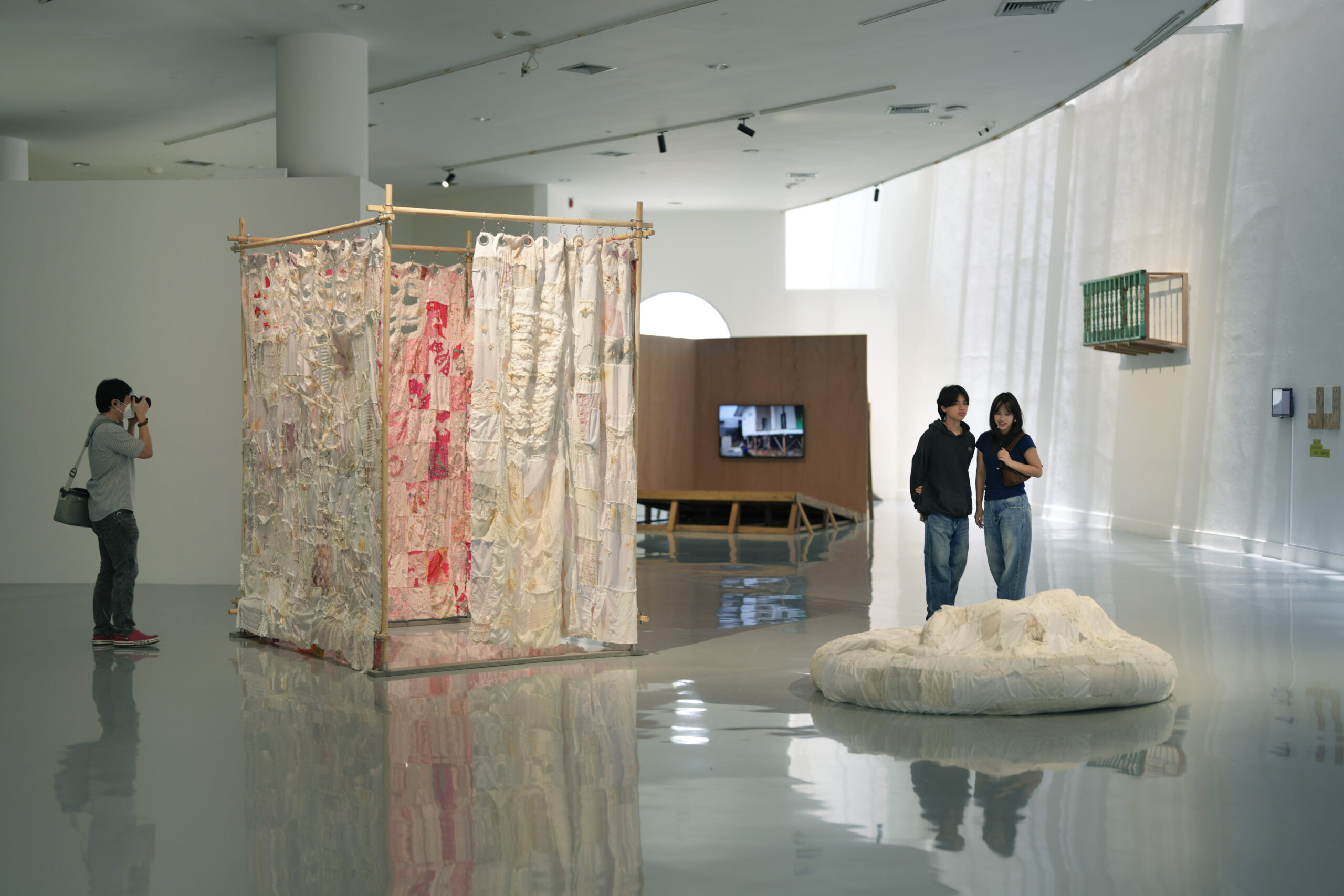
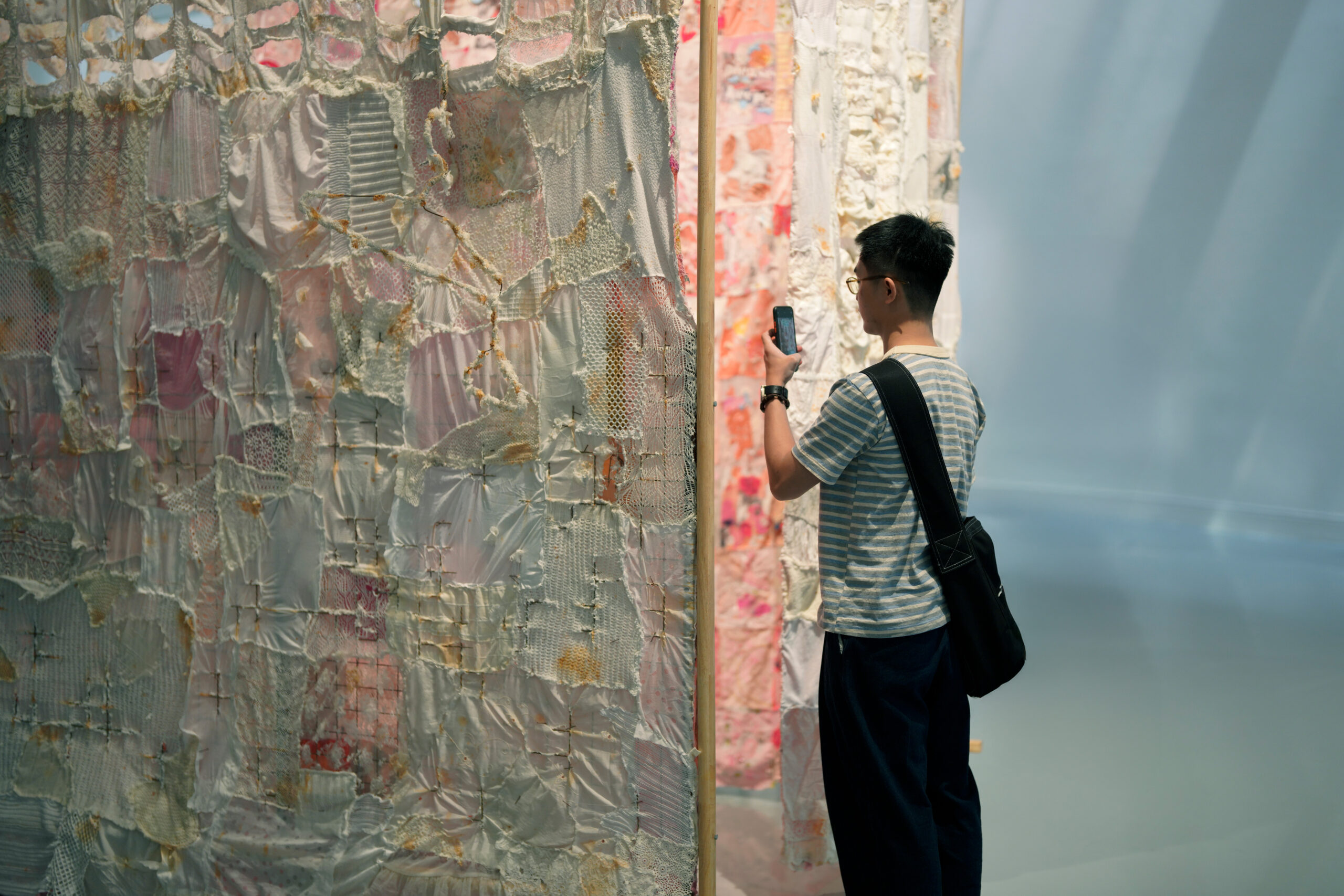
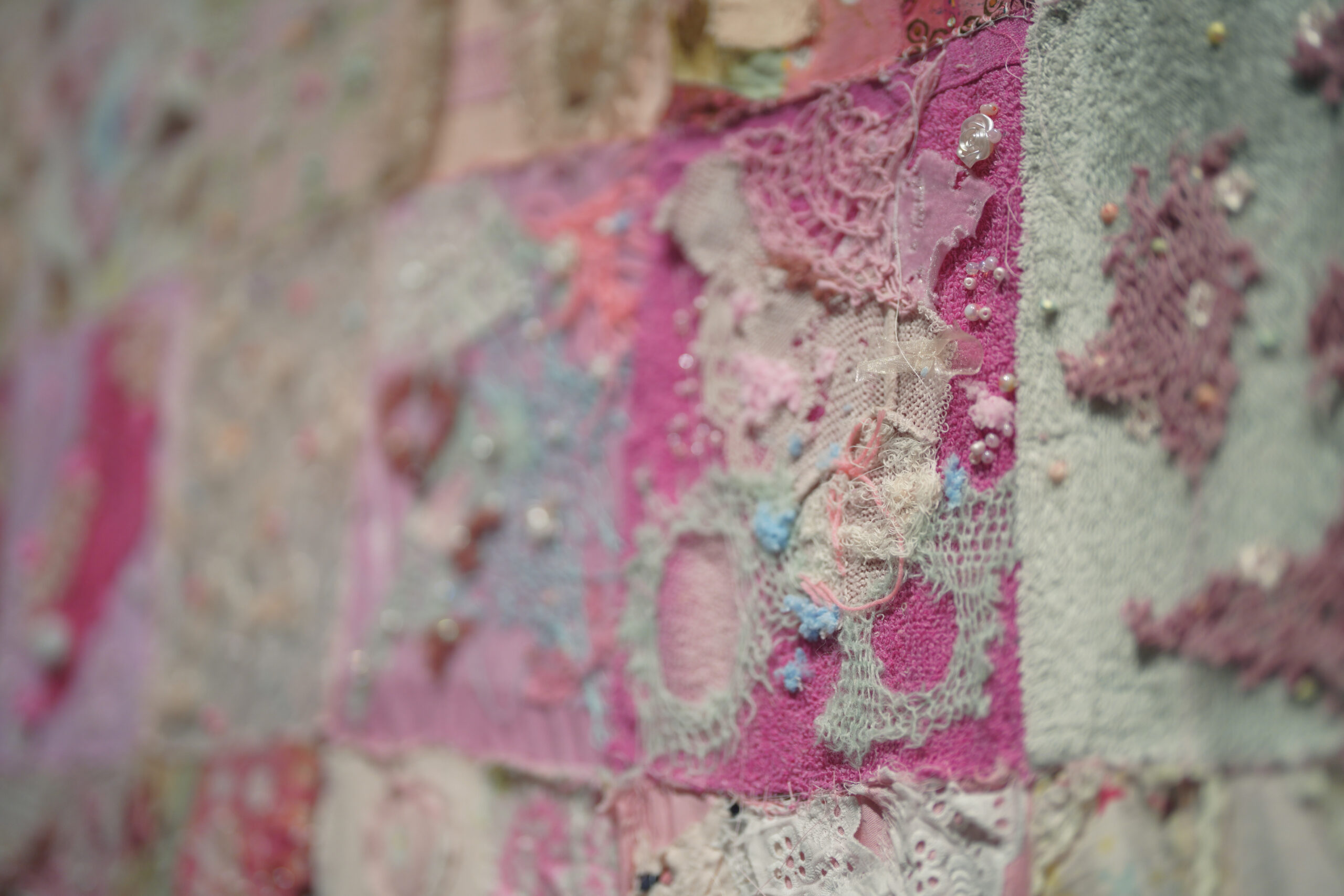
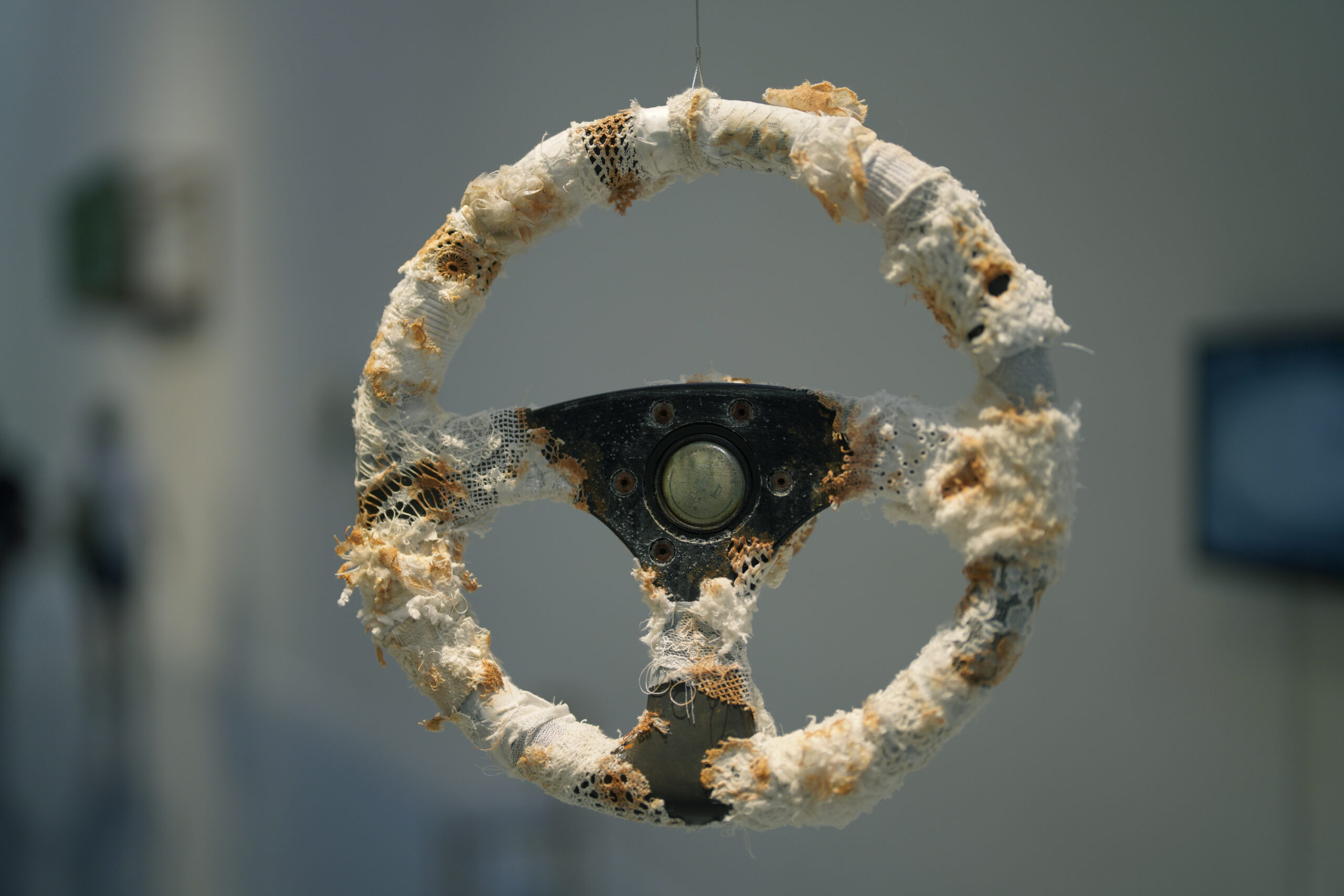
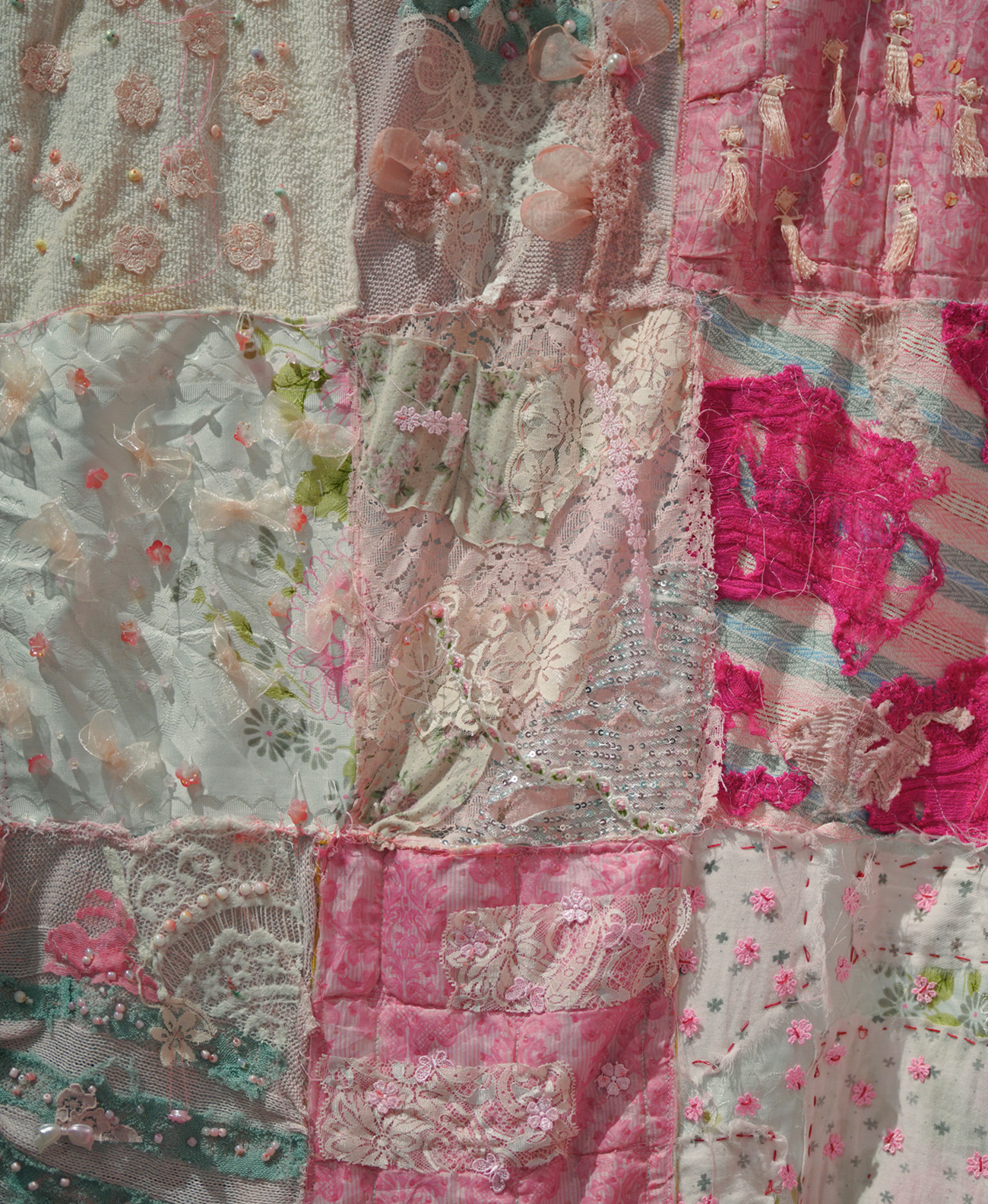
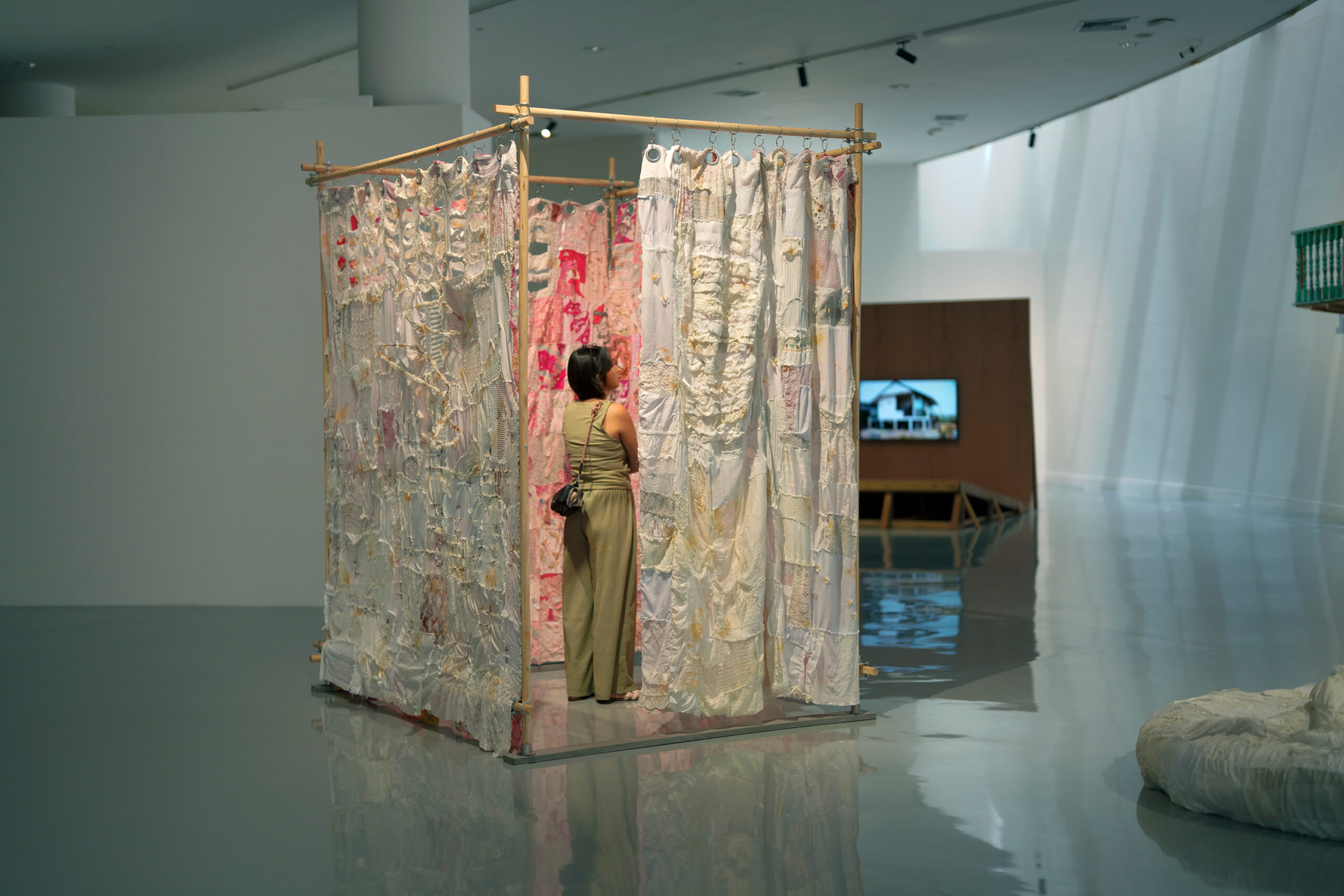
In Things Left to Forget, Wangprasertkul creates artworks by gathering and reconstructing objects tied to her trauma—nails, a clothes hanger, a pillow, a steering wheel, and a bathroom—using household materials. Through sewing and transformation, she alters their fundamental functions, stripping them of their potential to cause harm again. This process takes her back to confront lingering memories and the emotions embedded in each object.
Things Left to Forget reflects the inescapable nature of traumatic memories, which resurface through the body’s involuntary responses. The work highlights the lasting impact of domestic violence on survivors and addresses the recurring cycle of abuse in Thai society—an issue often dismissed or overlooked, concealed within the ordinariness of everyday household objects.
Things that Stay, 2025
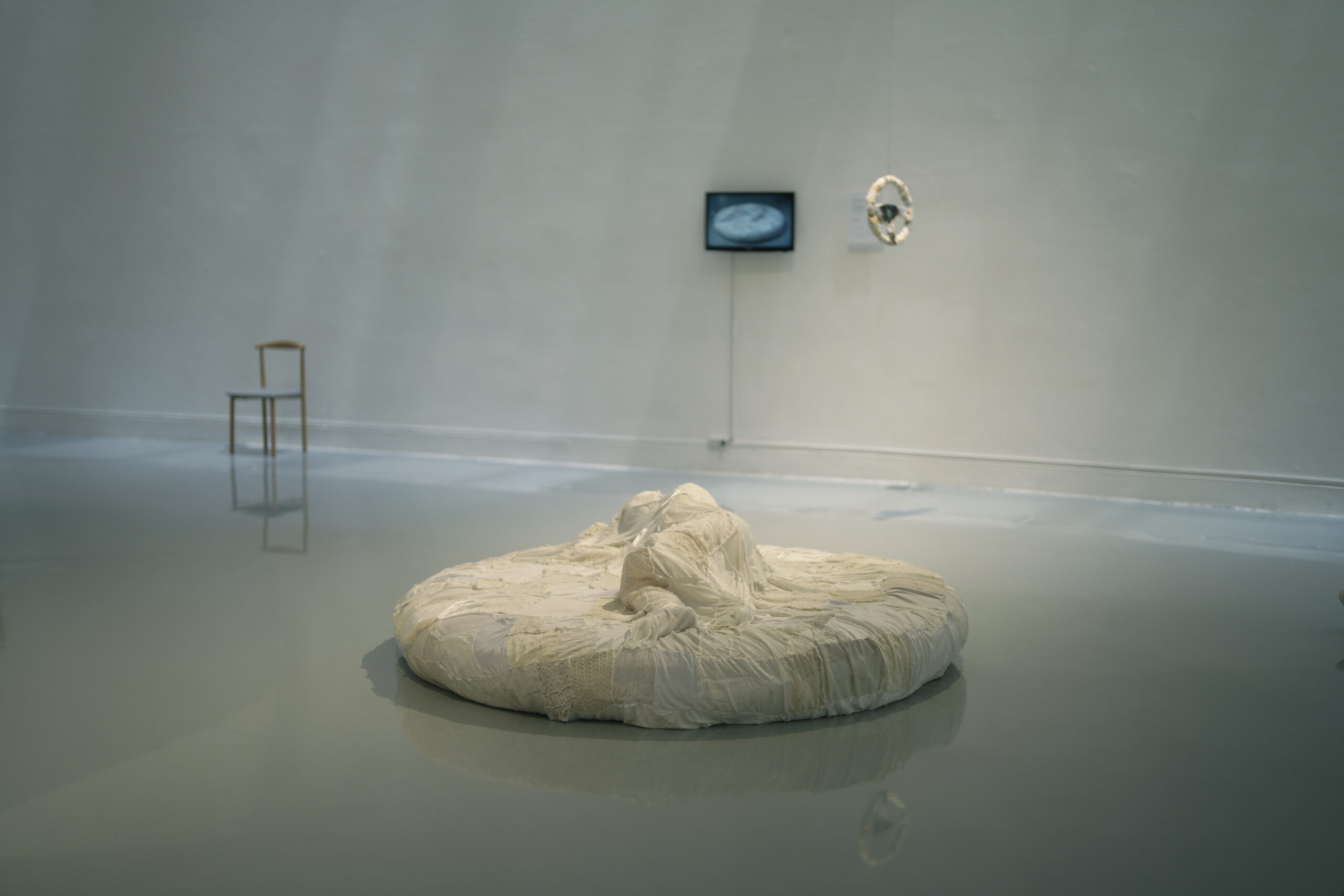
This live performance centres on a pillow, meticulously crafted from fragments of discarded fabric stitched together as a vessel of memory. Memory, in this instance, draws from the artist’s childhood recollections of domestic violence, in which pillows once played a part.
The act of enlarging the pillow beyond its natural scale embodies the weight and magnitude of these memories, amplifying their lingering impact upon the artist. Shrouded within, she appears engulfed—as though the pillow continues to suffocate and confine her, holding her captive within the memories that remain vivid and inescapable.
The performance was presented in two sessions per day—Morning Session: 10:30 AM – 2:30 PM and Evening Session: 3:30 PM – 7:30 PM—across ten consecutive Saturdays during the exhibition, making each appearance an eight-hour endurance of emotional and physical constraint.
Thus, the performance stands a poignant reminder of past violence, still hardwired within the artist’s body.