
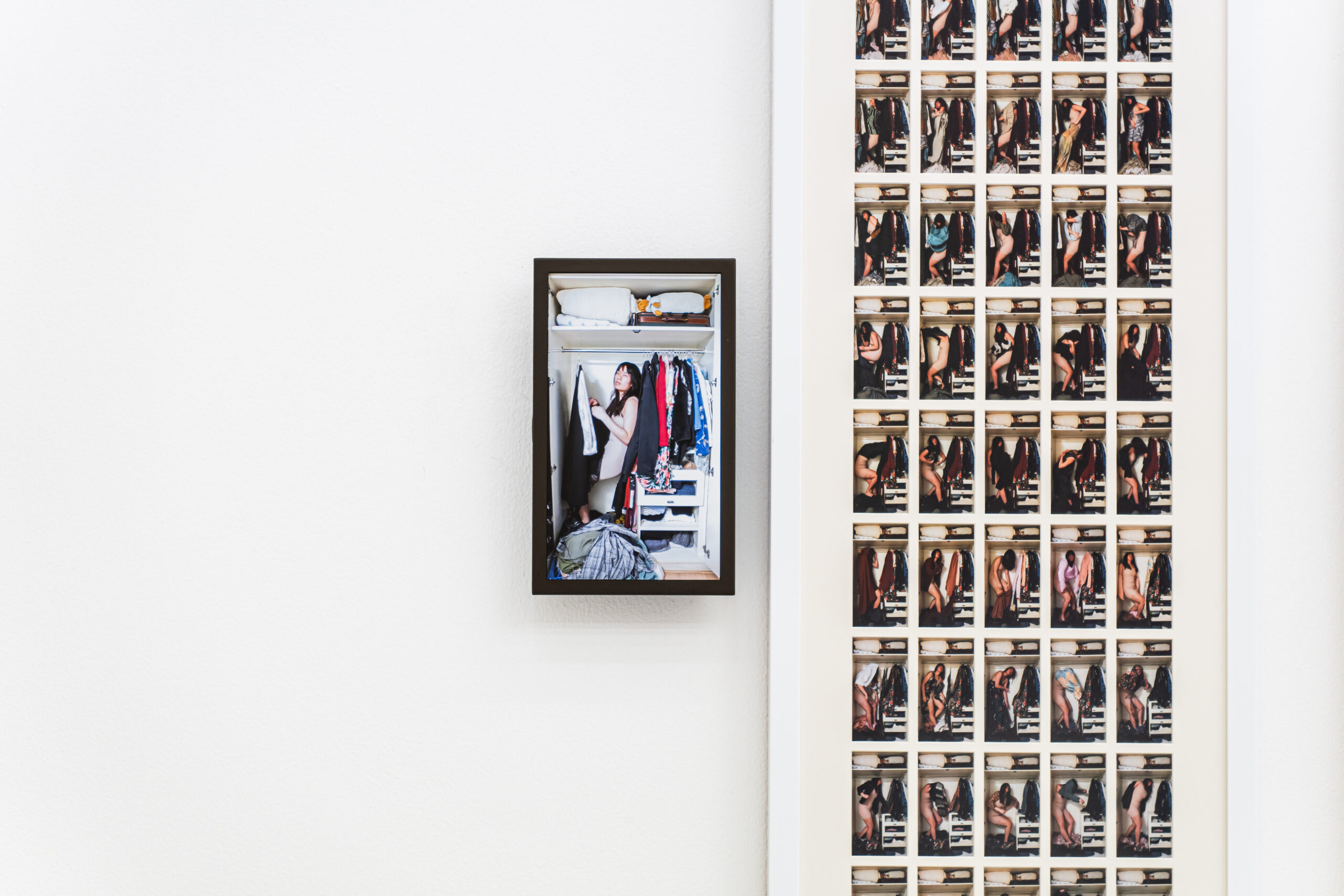
If the Shoes Fit
21.11.2025 – 31.01.2026
a part of The Abyss Is Calling
The 20th Anniversary Exhibition
At Gallery VER
Curated by Rirkrit Tiravanija
My memory of Gallery VER is tied to my first solo exhibition in 2024. During that period, I was working full time while also preparing and performing the exhibition. The gallery and my office were located close to each other, so I could stop by after work, or sometimes just take a slightly different route from my usual commute and arrive there. Throughout the exhibition, I even wore the same clothes I used at the office while performing in the gallery. My daily life, both as an artist and as a full-time employee, began to resemble each other in certain ways. With only a small adjustment, I could switch from one role to the other almost instantly.
Looking back, the most vivid feeling is the constant shift between being an artist and being an employee. In many ways, an artist is also a form of labor, freelance labor without benefits or a stable income. Because of this, I had to rely on my full-time job in order to continue making art. These two forms of labor may share a blurred boundary, but they are still different, and they depend on each other to survive.
Switching roles over and over again, trying to sustain both responsibilities at the same time, is not so different from changing clothes and attempting to make each outfit fit. This action reflects the reality of neoliberal capitalism, where responsibility is pushed from structural systems onto the individual. It creates a belief that the system itself is difficult to change, leaving workers with only one option: to constantly adjust themselves. Risks and problems, such as unstable work, declining health, or uncertain income become personal burdens that workers must manage on their own if they want to survive.
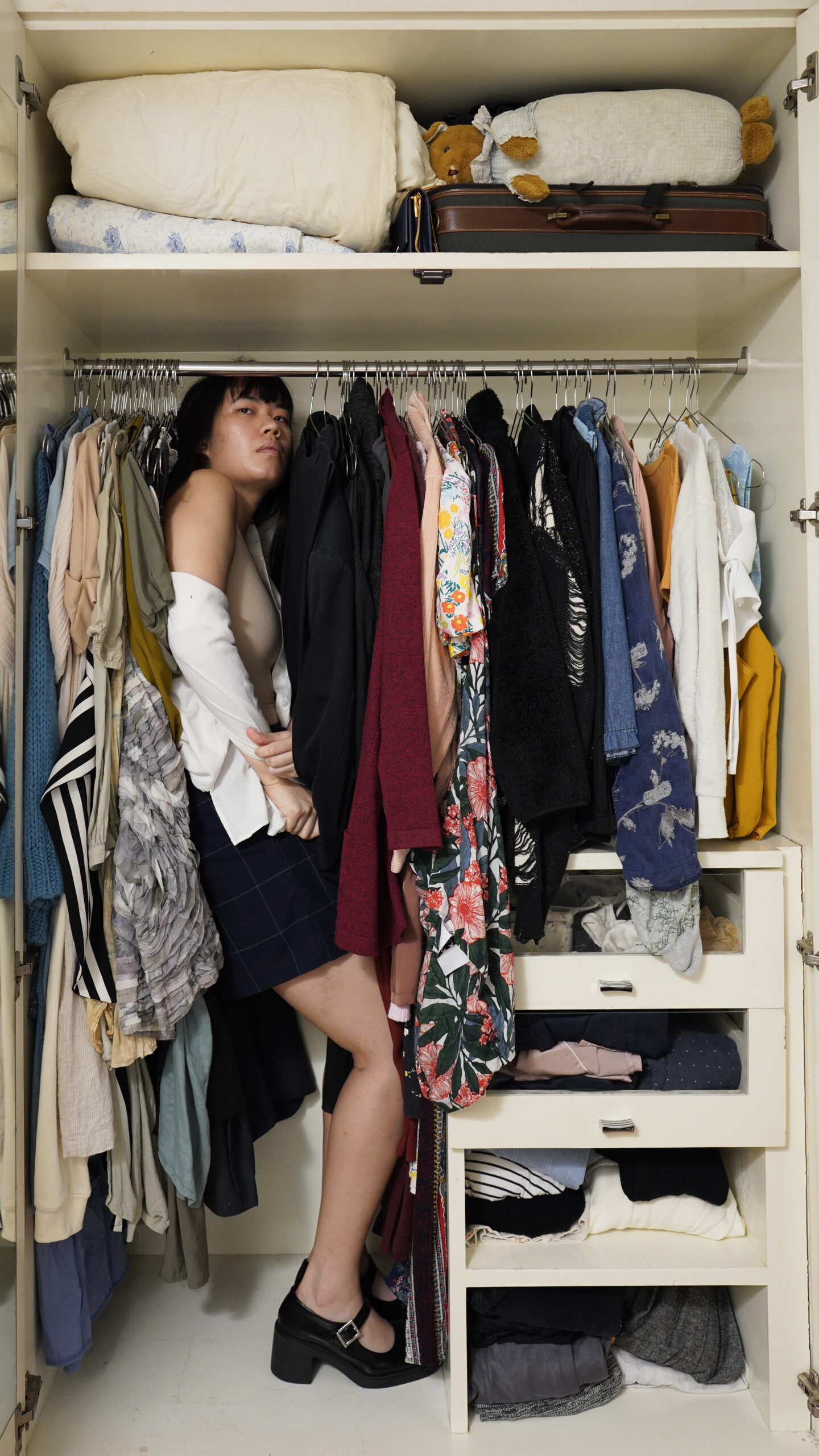
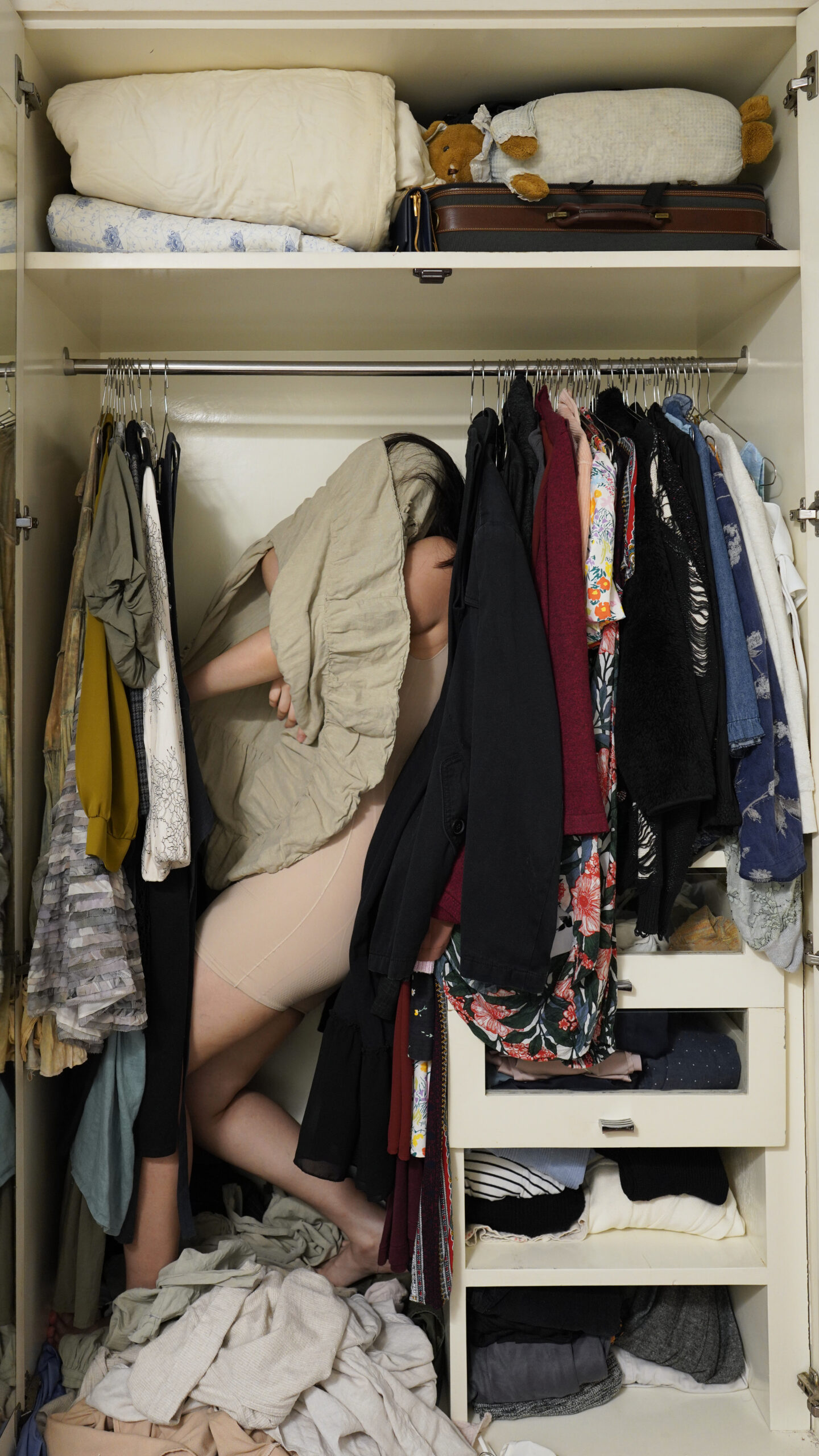
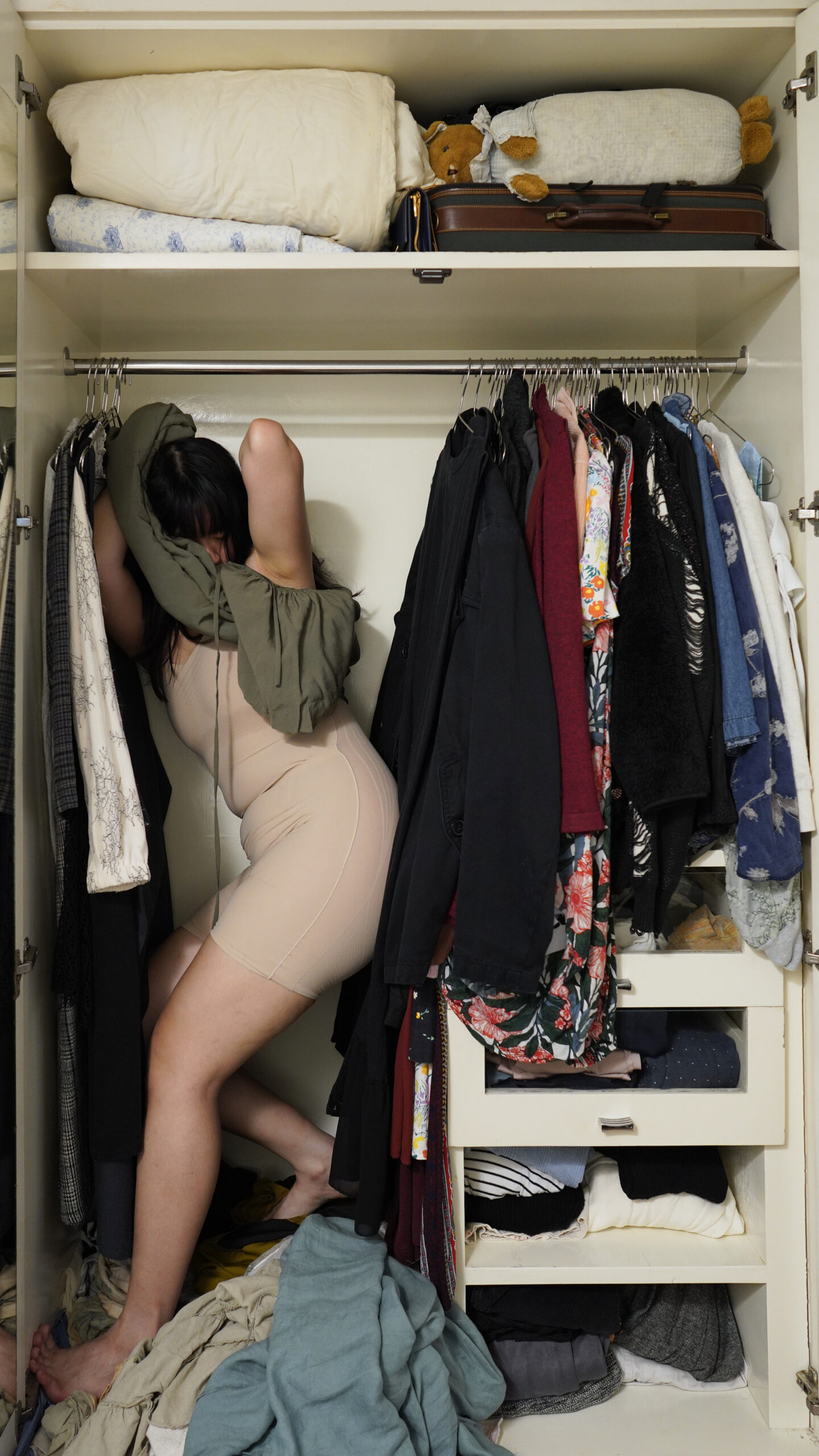
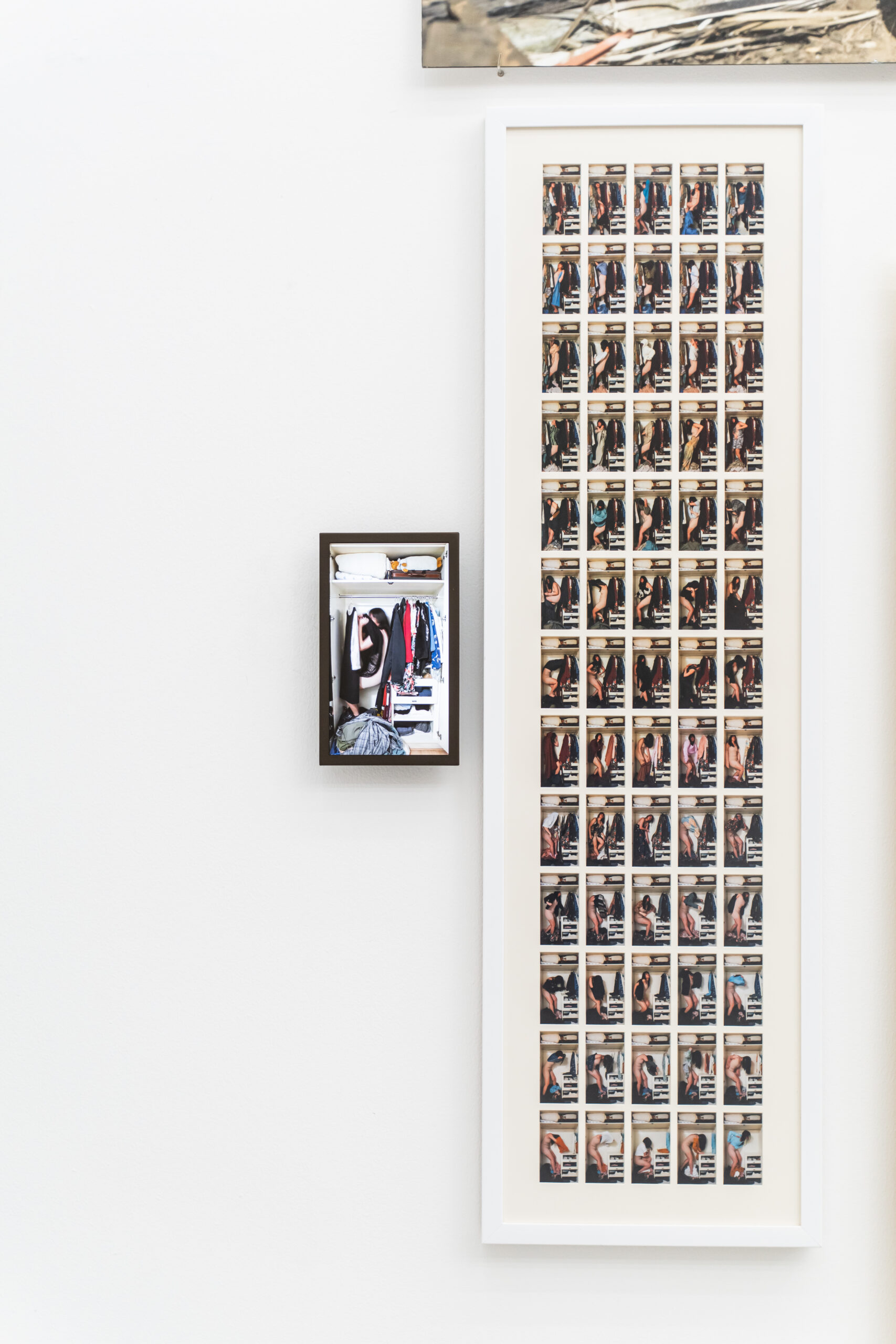
This photograph from the performance If the Shoes Fit captures a moment when I was trying to wear different kinds of clothes whether they are clothes that I use every day, clothes I once could wear, and clothes I hoped I could still fit into. The pulling, stretching, and movements within the discomfort of these garments reflect the effort of shifting between two forms of labor. The tightness, restriction, and lack of mobility in my body not only forced it to hesitate or stop, but also led me to question a struggle that continues until this day: which roles of mine is the one that should be remained
Photo by: Marisa Srijunpleang