




I will be there, I am here, and I was there
15.12.24 at Studio Plesungan, Central Jave, Indonesia
as part of undisclosed territory #14: “Exploring Ancient Civilizations: the Evolution of Rasa,”
This performance is inspired by archaeological discoveries that reflect early humans’ fear of Death, as primal rasa. This fear is a timeless and universal experience, which creates bridges between ancient and modern humans. Across various civilizations, the fear of being forgotten has driven a desire of mankind to leave a mark on the world. This desire can be seen in the creation of artifacts, architecture, and rituals during civilization’s advancements.
The performance explores how humans, driven by a deep impulse to transcend mortality, manifest this through acts of creation. This resonates with the concept of rasa, emphasizing how human actions are not merely responses to instinctual stimuli but expressions of a deeper desire to resonate with our understanding of existence.
This performance was also inspired by my visit to Tembeling Beach and Forest in Nusa Penida after Indonesia Bertutur 2024. While there, I observed numerous stacks of rocks along the beach, created by human hands over time. These rock stacks seemed to reflect a universal human urge: to be acknowledged, to leave a mark, and to create proof of existence through simple yet purposeful acts.
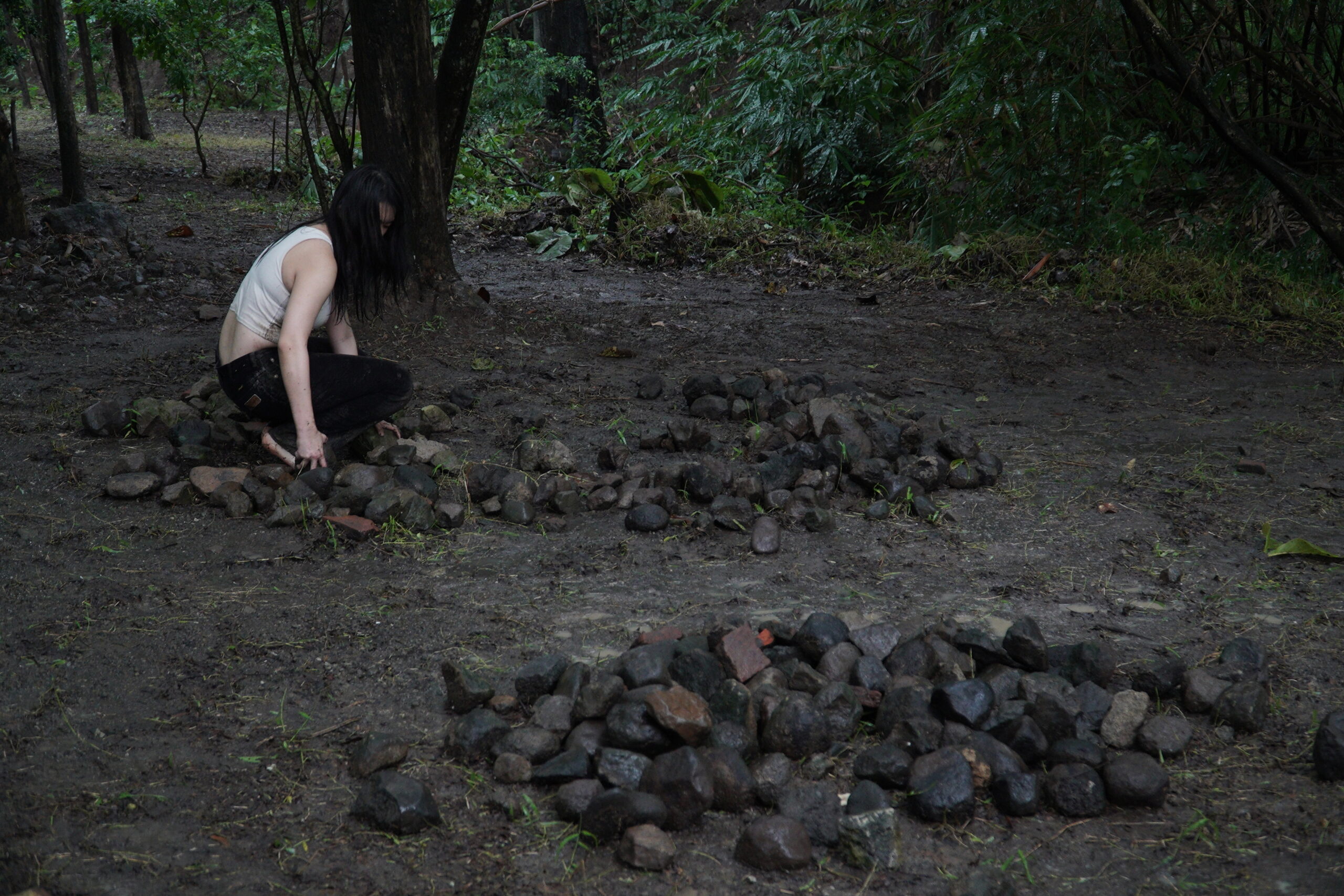
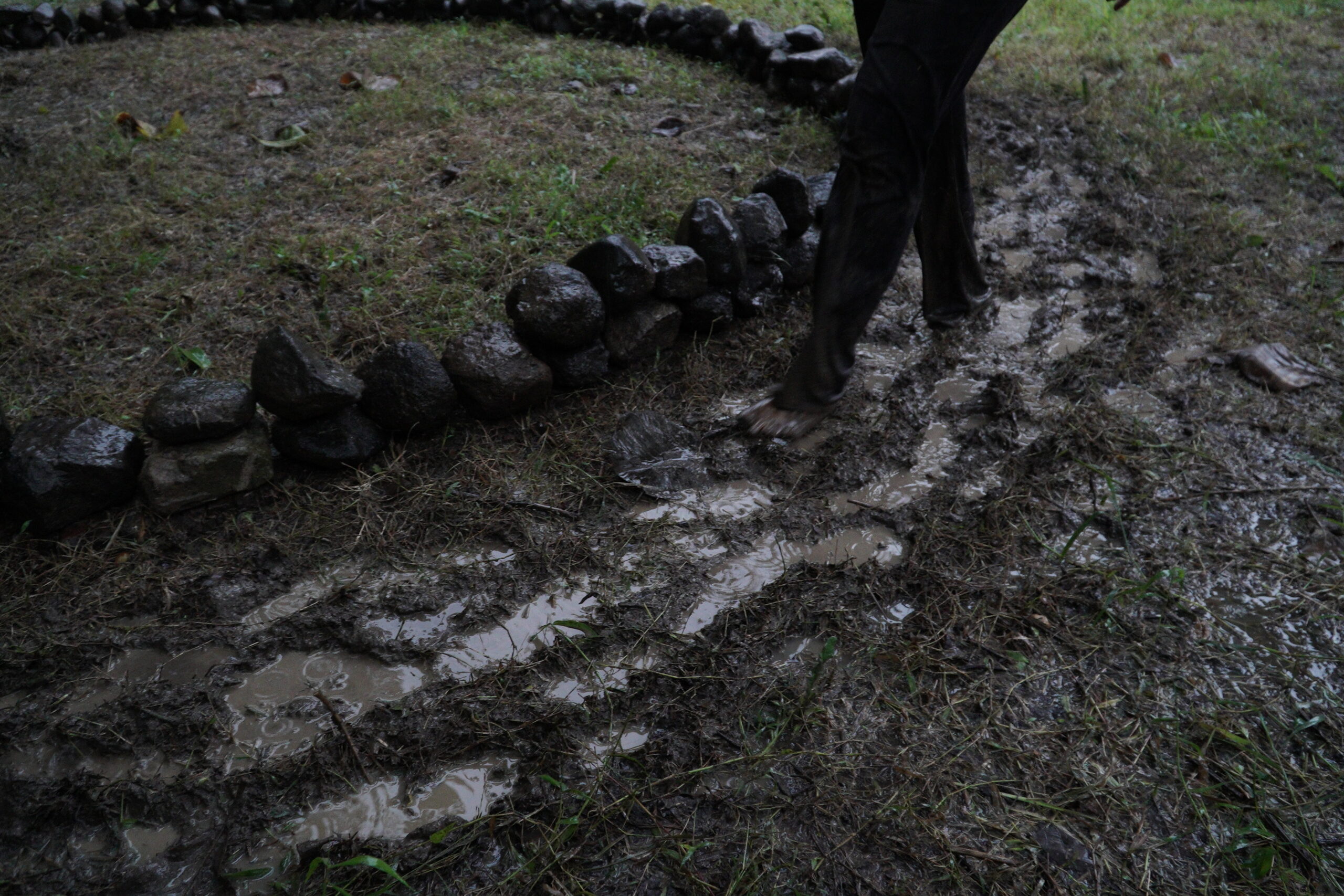
In this performance, titled “I will be there, I am here, and I was there,” the artist collected rocks from the area of Studio Plesungan before the performance began. During the performance, she stacked these rocks despite their unavoidable falls, reflecting the persistent human struggle to create something enduring in the face of the impermanence of nature and time, until the rocks reached her standing height and size. The artist hoped that this rock monument would serve as proof of the time and place of her existence. By inviting viewers to witness this performance, the audience contemplated the connection between the fear of death and creativity. The knowledge that this rock monument would someday be destroyed—whether by natural causes or human intervention—reflected the fragility of human mortality.